Key takeaways
- Slabs on the ground often pass moisture vapor, even when they look dry.
- Testing tells you how much moisture is moving through the concrete.
- High readings call for a vapor-tolerant primer or a fix at the source.
- A simple plastic sheet taped to the floor is a rough warning sign, not a test.
How slabs hold moisture
Concrete is porous. Water in the soil under a slab can move upward as vapor and escape through the surface. In basements, garages on grade and outbuildings without vapor barriers, this movement can be steady.
Coatings are often much less permeable than bare concrete. They hold the vapor beneath them, and the pressure can lift the film.
How moisture is measured
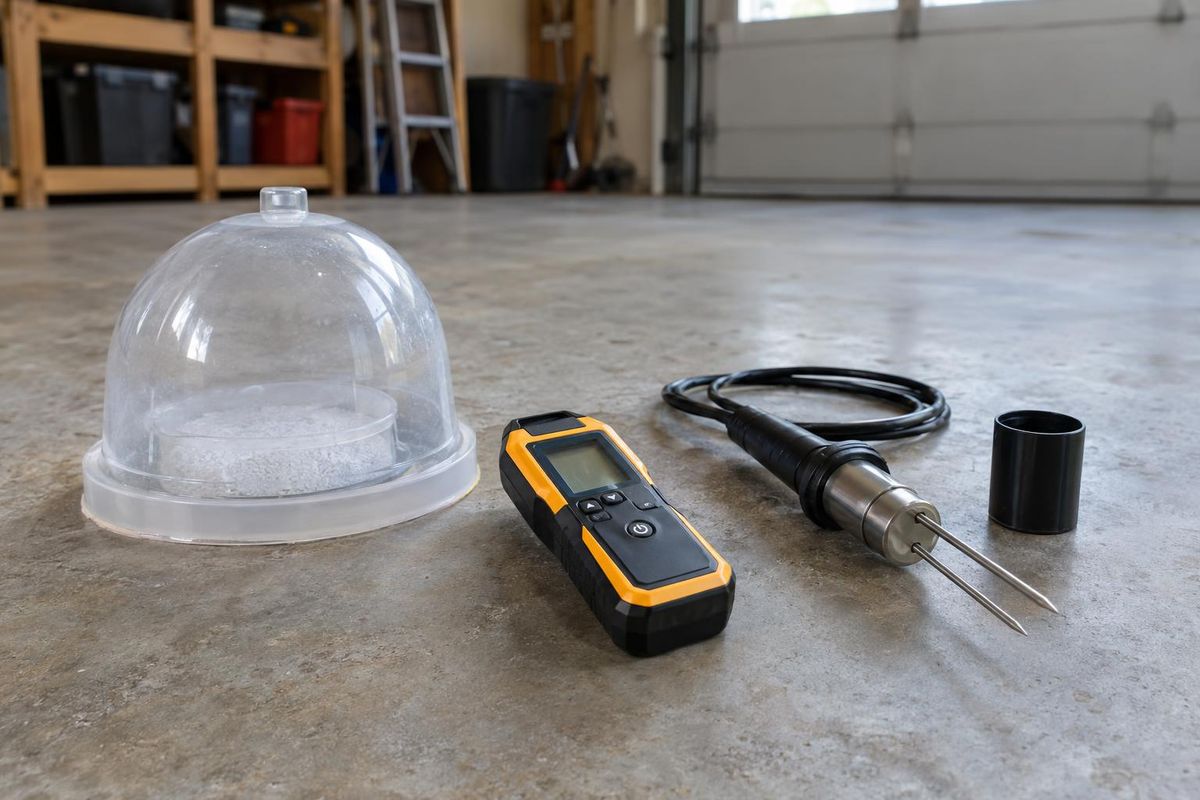
Calcium chloride tests measure how much vapor leaves the surface in a set time. In-slab relative humidity probes measure moisture inside the concrete, which is a better predictor in many cases. Surface meters give quick readings.
These tests take time and are best planned before the coating day.
What can be done
For high readings, a moisture-tolerant primer can allow coating within its stated limits. In other cases, the better answer is to fix the source: gutters, downspouts, grading, drainage or a leak.
Sometimes the right answer is a breathable finish, like a sealer or stain, instead of a film-forming coating.
Warning signs to watch
A cool, damp feeling, white mineral deposits, a musty smell, or darkening after rain are all clues that moisture is moving through the slab. Tell your installer about any of them.
In Nashville and nearby areas, heavy spring rains make these signs easier to spot.
Quick answers
Is a plastic sheet test reliable?
It is a rough clue only. Proper testing with a kit or probe is more accurate.
Can any coating be applied over a damp slab?
No. Coatings have moisture limits, and we choose systems that match your readings.
Will a new vapor barrier fix an old slab?
Not under an existing slab. We use primers and drainage fixes instead.