Key takeaways
- Most peeling starts with a poorly prepared slab.
- Moisture vapor from the ground can push a coating off.
- Hot tires can lift thin or poorly cured coatings.
- Testing and grinding before coating prevent most failures.
Poor preparation
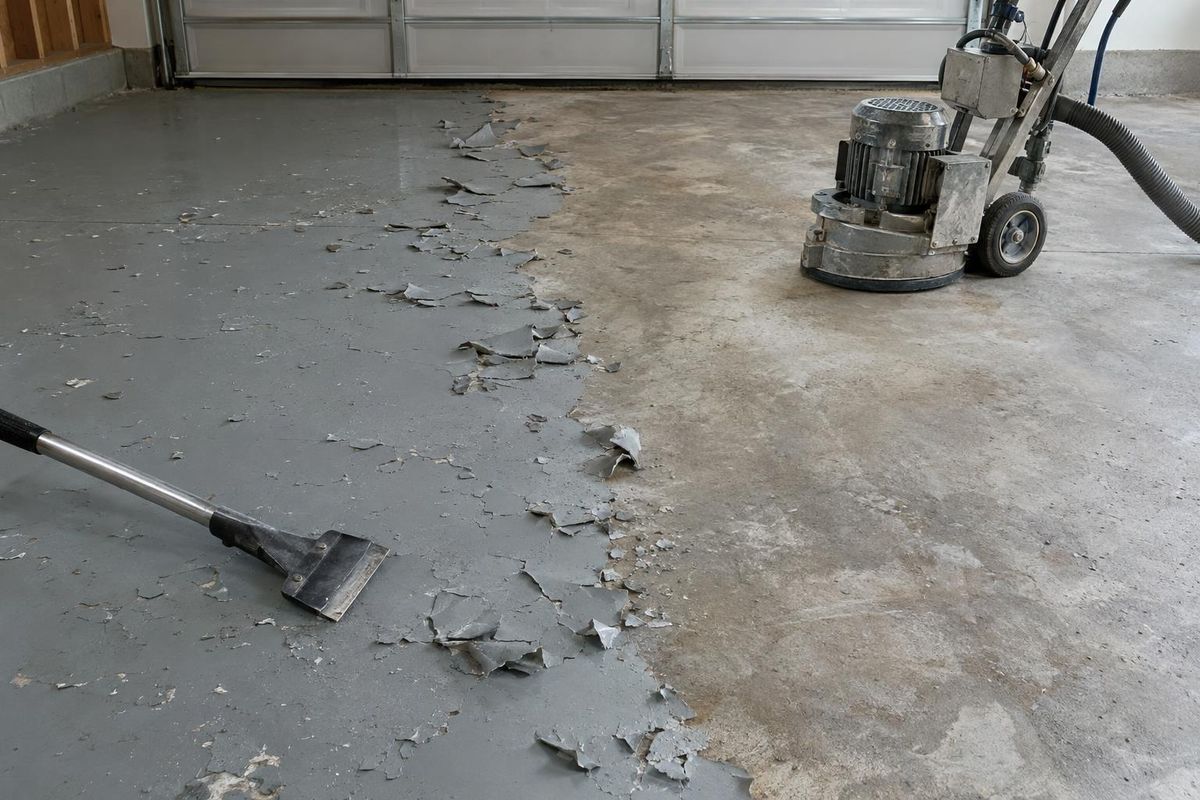
A coating needs something to grip. If the slab was only cleaned or acid etched, or if sealers and curing compounds were left on the surface, the coating sits on top like a skin and can peel off in sheets.
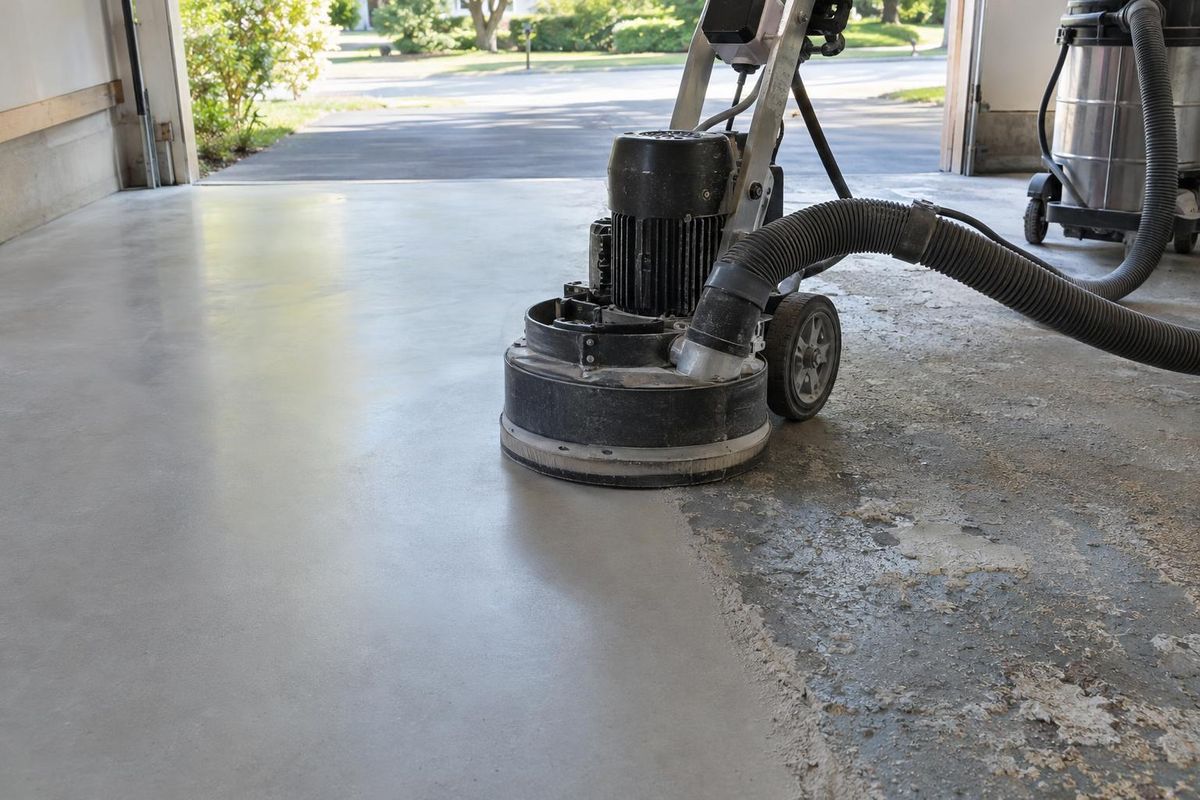
Diamond grinding opens the surface and removes contaminants, which is why it is the standard for lasting floors.
Moisture vapor
Concrete can pass vapor from the soil beneath it. A coating that seals that vapor in can blister, lose adhesion and peel. The problem is worse in basements and slabs without a vapor barrier.
Moisture testing before coating, and a vapor-tolerant primer when readings are high, prevent most of these failures.
Hot-tire pickup
When a car comes into the garage after a drive, its tires are hot and soft. Some thin or poorly cured coatings can soften and lift under that heat, leaving tire marks or pulling up in patches.
Hard, fully cured systems, often finished with polyaspartic, handle hot tires far better.
What to do if yours is peeling
If the coating is only peeling in spots, a repair may be possible. If it is peeling widely, the old material usually has to be removed and the slab prepared again. Coating over it simply repeats the failure.
A good installer will test the bond and tell you which situation you are in.
Quick answers
Why did my garage floor paint peel?
Paint is thin and often applied over an unprepared slab, which makes it prone to peeling under hot tires and moisture.
Can peeling epoxy be repaired?
Small areas sometimes can. Widespread peeling usually means removal and a new system.
How do I avoid peeling next time?
Insist on grinding, moisture testing and a system suited to your garage.