Key takeaways
- Freeze-thaw cycles and de-icing salts are the biggest threats to outdoor slabs.
- UV-stable topcoats resist yellowing and chalking better than interior epoxies.
- Texture matters, because wet concrete can be slick.
- Sealing and recoating on schedule protects the concrete underneath.
What the weather does
Water enters concrete, freezes and expands, which flakes the surface over time. De-icing salts make that worse, and sun and rain fade and weather unprotected slabs.
In Nashville and across Middle Tennessee, the many cycles of rain, frost and warm days are hard on exposed patios, steps and drives.
Picking the right system
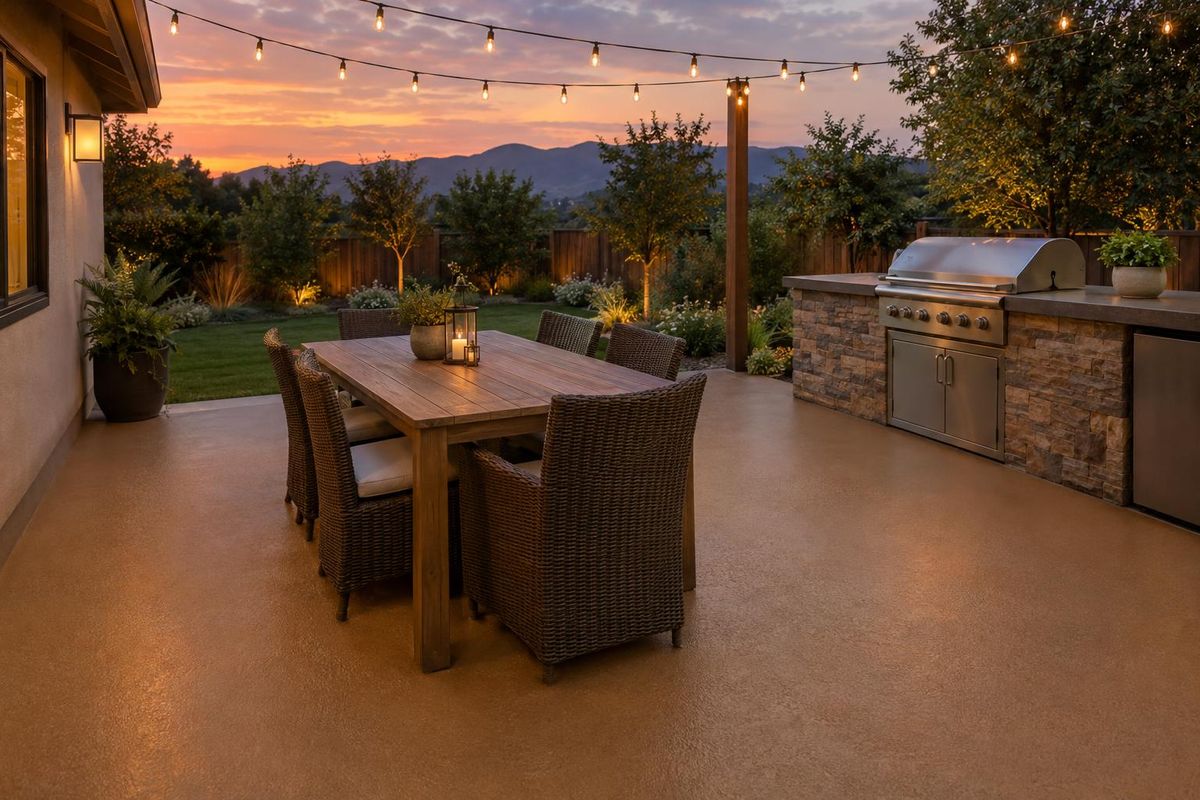
Outdoor coatings need UV-stable resins, such as polyaspartic or aliphatic urethane, and sealers made for exterior use. Interior epoxies can chalk and fade in sunlight.
For decorative surfaces, stamped overlays and stains need an exterior sealer to keep their color.
Traction and safety
Smooth, wet concrete is slippery. Outdoor systems usually include texture or grip additives, especially on steps, ramps and pool decks.
A textured finish also hides light dirt and wear.
Maintenance
Sweep, rinse and clean outdoor coatings seasonally. Reseal or add a topcoat when water stops beading on the surface.
Fix cracks and chips promptly so water cannot get under the coating.
Quick answers
Do outdoor coatings fade?
UV-stable systems resist fading far better than interior ones, but all surfaces age slowly in the sun.
Is salt a problem?
Yes. Rinse salt off in winter and avoid harsh de-icers on new coatings.
How often should I reseal?
It depends on exposure. We help you set a schedule after we see your surface.