Key takeaways
- Concrete gains strength quickly but takes much longer to dry.
- Coating too soon can trap water and cause blistering.
- Moisture testing is a better guide than counting days.
- Curing compounds and sealers have to be removed before coating.
Curing versus drying
Concrete cures by chemical reaction with water, and it reaches most of its strength in about a month. But excess mixing water can take much longer to leave the slab, especially thick slabs or those in cool, humid weather.
A slab can be strong enough to drive on and still too wet to coat.
Why waiting matters
A coating seals the surface. If water is still moving out of the concrete, it gets trapped and can blister or weaken the bond. Alkaline moisture can also attack some resins.
That is why installers test the slab instead of guessing from the calendar.
Curing compounds and finishes
Many new slabs are sprayed with curing compounds or hard-troweled to a dense, smooth surface. Both can block a coating from bonding.
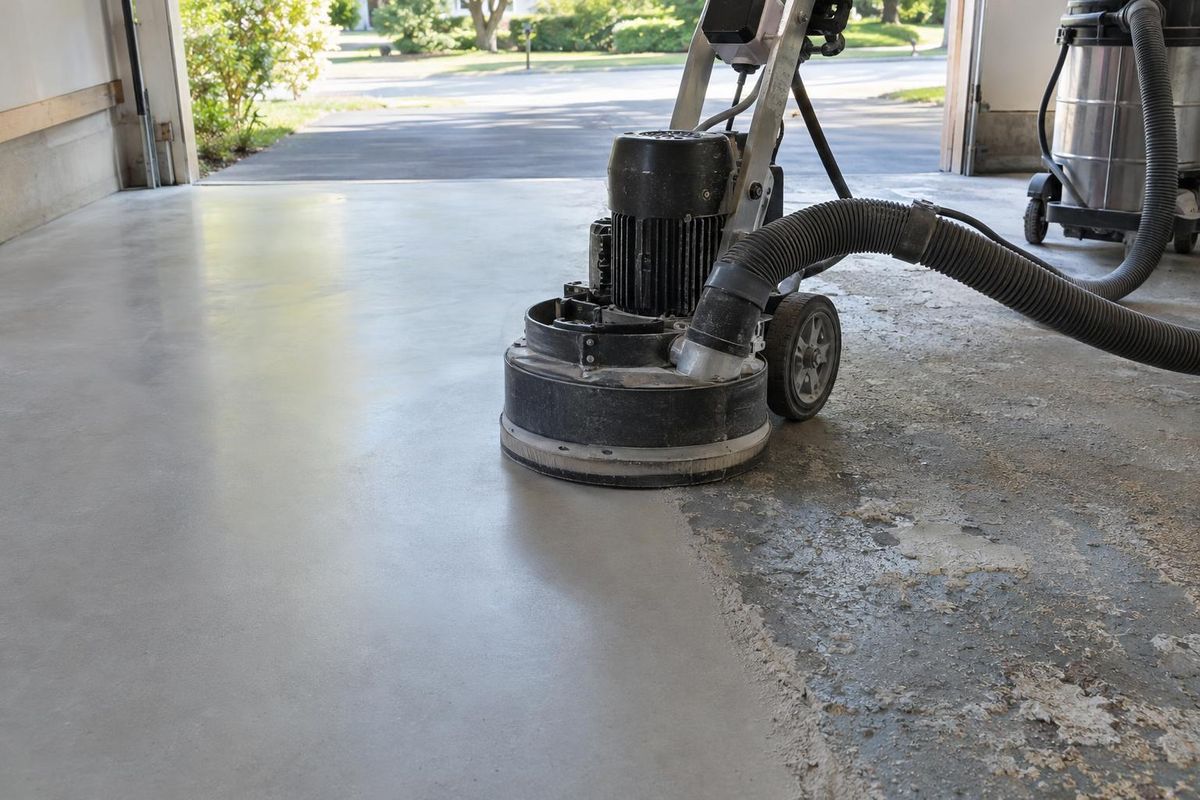
Diamond grinding opens the surface and removes them, which is part of normal preparation.
Planning around new builds
If you are building or adding a garage, tell your installer the pour date early. Plan for testing, and allow time for grinding and coating before furniture and vehicles move in.
In the meantime, keep the slab clean and dry and avoid sealers unless your installer approves them.
Quick answers
Can I coat concrete after one week?
Usually not. Even if it is strong, it is often too wet. Testing tells us for sure.
Does weather change the wait?
Cool, humid weather slows drying, and warm, breezy weather speeds it up.
Do I need to seal new concrete first?
Not before a coating. Sealers must be removed, so check with your installer.